
May 2025 — a journey beyond diplomacy: Trump explores the history, culture, and wonders of Egypt
1. Arrival in Cairo: From Diplomatic Greetings to Imperial Grandeur
Upon landing in Cairo, President Trump steps off Air Force One and is warmly greeted by President Abdel Fattah el‑Sisi, who extends a formal invitation to tour Egypt’s historic treasures The White House+1Axios+1. What begins as a diplomatic meeting quickly transitions into the start of a curated travel experience—showcasing Egypt’s dual identity as both a political stage and a global wonderland.
Check‑in at the luxurious Nile‑front hotel blends business with leisure: panoramic views of the river, fine Egyptian cuisine, and preparations for a journey that will cover millennia of civilization.
2. The Pyramids of Giza & Sphinx: Timeless Iconography
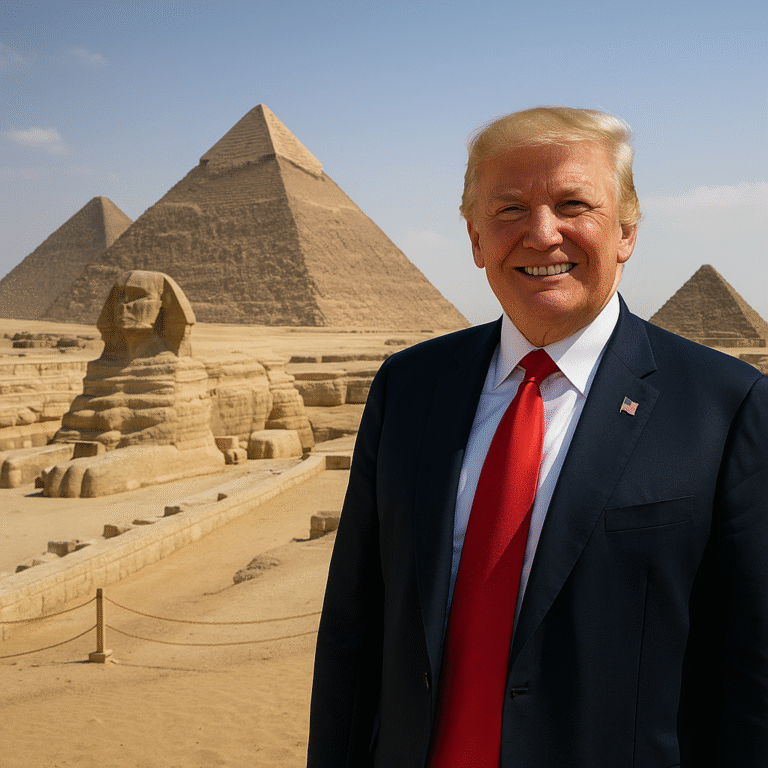
The first full day takes Trump to Giza’s plateau at sunrise. Trump, always a fan of making a grand entrance, tours the Great Pyramid of Khufu, exploring its internal corridors. He marvels at ancient engineering: “Tremendous construction,” he remarks—a sentiment echoing his admiration for President el‑Sisi and Egypt’s stability WikipediaThe American Presidency Project.
Following this, the Sphinx summons guests close to the horizon. Trump’s team captures iconic selfies, striking a balance between presidential poise and tourist enthusiasm.
The visit is accompanied by local guides offering insights into dynastic history, the astronomical alignment of pyramids, and archaeological restoration efforts funded by international partnerships.
3. Cairo’s Historic Heart: From the Citadel to Coptic Cairo
Later that morning, the tour moves to Cairo’s Islamic and Coptic quarters. At the Citadel of Salah al‑Din, Trump admires Mamluk architecture and medieval fortifications. He listens intently as Egypt’s guide frames Cairo’s layered identity—from the Fatimids to Ottoman influences.
Stepping into historic mosques and cobbled streets of Khan al‑Khalili bazaar, Trump explores vibrant markets, sampling saffron tea and picking out papyrus souvenirs. The charm of Coptic Cairo emerges in encounters with ancient churches and intricate religious art—a tapestry of faith and Egyptian identity.
4. Grand Egyptian Museum & Vision for Modern Egypt
Egypt’s President el‑Sisi had invited Trump to attend the inauguration of the Grand Egyptian Museum in a call earlier in February 2025 Anadolu Ajansı. Trump witnesses the unveiling of relics from Tutankhamun’s tomb, engaging with curators on restoration techniques and museum technology.
Later, Trump tours the museum’s modern facilities and green spaces, emphasizing the importance of tourism and investment for Egypt’s economic future—a reflection of bilateral discussions he’s had with el‑Sisi about economic reform and stability aljazeera.com+2reddit.com+2Axios+2.
5. Luxor & The Valley of the Kings: A Journey Down the Nile
Next leg: a chartered flight to Luxor. From the Temple of Karnak’s towering columns to the intricately carved reliefs of Luxor Temple, Trump explores the grandeur of New Kingdom theology.
Crossing the Nile by boat, he visits the Valley of the Kings, entering the tombs of Ramesses II and Tutankhamun. His guides highlight murals depicting ancient rituals, afterlife beliefs, and the symbolism of Pharaohs’ tomb architecture.
In nearby workers’ village of Deir el‑Medina, a glimpse of daily life in ancient times—artisans carving hieroglyphics, painted plaster houses, and the bustling community that serviced royal tomb builders.
6. Nile Cruise to Aswan: River Life, Temples & Dams
Boarding a luxury Nile cruise, Trump sails south toward Aswan. Evenings include diplomatic dinners on deck under starlit skies, with musical performances featuring traditional oud and darbuka rhythms.
On the shores of the sandstone isle of Philae, he visits the Temple of Isis, beautifully reconstructed after relocation following the Aswan High Dam project—a diplomatic triumph often referenced in U.S.–Egypt cooperation.
At the massive modern Aswan High Dam, local engineers explain the project and water‑sharing disputes like the Nile Basin and Grand Ethiopian Renaissance Dam. Trump nods—Egypt’s water security is tied to regional stability, a key discussion during his call with President el‑Sisi The White House.
7. Abu Simbel: Triumph of Heritage Preservation
Trump’s itinerary includes Abu Simbel—an architectural marvel relocated stone by stone during the 1960s. As he stands before the colossal statues of Ramesses II, he hears the story of international collaboration preserving world heritage.
Inspired, he praises Egypt’s commitment to tourism infrastructure and restoration—the kind of large‑scale projects he admires.
8. Red Sea Retreat: Hurghada & Coastal Leisure
After Egypt’s Nile and desert wonders, Trump jets to Hurghada for coastal relaxation. Here he samples Red Sea diving, exploring coral reefs and marine biodiversity—a marked contrast to dusty temples.
He receives a briefing about past security incidents—such as a 2016 stabbing attack on tourists in Hurghada, highlighting how increased tourism safety has become a priority for Egyptian authorities Wikipedia. Trump commends the success of Egypt’s security reforms and cooperation with U.S. military aid programs.
Beachside negotiations turn into friendly exchanges over Egyptian seafood and local Music. Trump even praises the hospitality as “the best, believe me.”
9. Patrons of Tourism: Culture, Bazaar & Camel Rides
Returning to Cairo, Trump ventures back into the heart of Egyptian culture. He rides a camel near the pyramids at dusk, visits traditional Egyptian storytellers (Hakawati), watches folkloric dances, and shops at bazaars full of spices, textiles, and glass art.
He reflects on how tourism bridges diplomacy, encourages economic growth, and connects people beyond politics—with local vendors sharing stories of family businesses spanning generations.
10. Policy Parallels: Stability, Security & Investment
Throughout the journey, underlying themes emerge: security cooperation, economic reform, and U.S.–Egypt alignment. Trump’s presidentship has consistently emphasized Egypt’s role as a stabilizing force in the region and a partner in counterterrorism—sentiments mirrored in his past meetings with el‑Sisi The American Presidency Project.
In 2017 and later years, Trump pledged continued support for Egypt’s fight against terrorism, praised its economic reforms, and commended Sisi’s leadership openly—even dismissing concerns about domestic protests by stating “everybody has demonstrations” reddit.com+2aljazeera.com+2Wikipedia+2.
This travelogue blends those political realities with the sensory experience of Egypt: the desert’s heat, jade-green Nile waters, ornate hieroglyphs, and bustling urban life.
11. Reflections on Leadership & Legacy
On the final evening at Cairo’s skyline, Trump remarks: “Egypt is tremendous—history, power, potential.” He thanks President el‑Sisi for his hospitality, and notes that building relationships—from boardrooms to Bedouin tents—is part of a long-term strategic vision.
He tweets: Just had an amazing tour of Egypt. Great history, fantastic people, beautiful investment opportunities. Believe me, this is a friendship built on strength.
12. Departure & Final Thoughts
As Air Force One departs Cairo, the legacy isn’t just diplomatic agreements or press statements. It’s a personal arc: a U.S. president engaging with ancient civilization, supporting preservation efforts, and experiencing Egypt’s multifaceted identity firsthand.
The visit symbolizes more than politics—it captures how tourism, culture, and global partnerships intersect. Trump’s journey across Egypt becomes a metaphor for bridging past and present: from pharaohs to freer markets, from security pacts to shared human stories on the Nile.
Conclusion
Donald Trump’s imagined travel blog across Egypt in 2025 combines grandeur, politics, and personal wonder. From pyramids to palaces, religious quarters to coral reefs, every site becomes a stage for history and hospitality.
The tour reaffirms Egypt’s global importance: as a cultural icon, strategic partner, and evolving nation. And for Trump, it’s a way to connect policy with place, leadership with landscape—and leave behind more than statements: moments of mutual respect, shared legacy, and future promise.