

Introduction: Why Rameswaram Called Me
When I introduced my travel plans to friends and family in Calcutta, many were surprised. “Why Rameswaram?” they asked. Some suggested I explore the lively cities of Chennai or Bengaluru, while others recommended Goa for beaches and fun. But my heart was set on Rameswaram.
This wasn’t just about visiting a temple town. For me, Rameswaram represented a spiritual homecoming. It is one of the Char Dham pilgrimage sites of Hinduism, and one of the holiest places in India. It is where faith and the sea meet, where the echoes of the Ramayana live in every wave.
And so, one early morning, I packed my bags in Calcutta, boarded my train and later a connecting flight, and began a journey that would take me almost to the southern tip of India — to a town where spirituality, history, and natural beauty blend in ways I could never have imagined.
First Glimpse of Rameswaram
After hours of travel, I finally reached Rameswaram, located on Pamban Island, connected to mainland India by the famous Pamban Bridge. The sight of the turquoise waters surrounding the bridge as my train slowly crossed it was something I will never forget. The vastness of the ocean, the salty breeze on my face, and the thrill of being in a place so unique instantly made me feel that every mile of travel was worth it.
Rameswaram didn’t feel like a bustling city; instead, it welcomed me with the calmness of a spiritual town. Temples, tiny shops selling flowers, seashells, and religious offerings lined the streets. Pilgrims walked barefoot with devotion, and the sound of temple bells filled the air.
The Sacred Rameswaram Temple
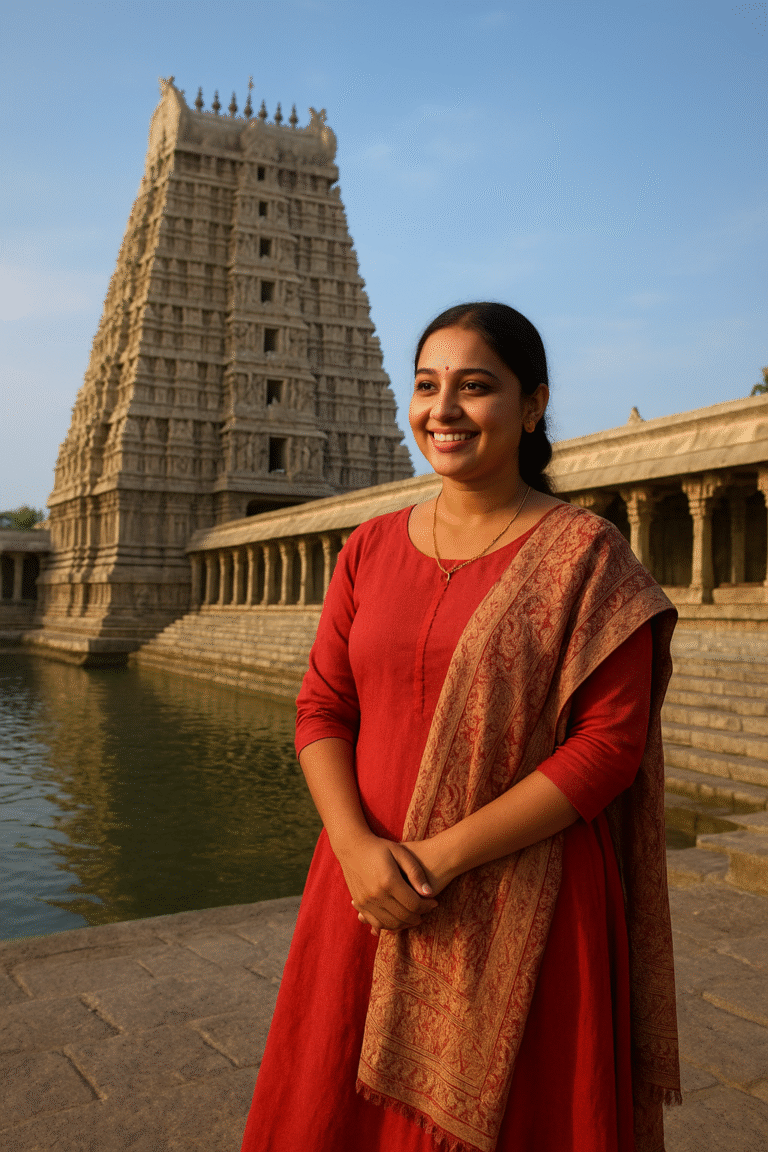
No journey to Rameswaram is complete without visiting the Ramanathaswamy Temple. This was my first stop, and honestly, it left me awestruck.
The temple is not just sacred; it is architectural brilliance in stone. Its long corridors are among the longest in the world, stretching endlessly with rows of carved pillars. As I walked barefoot on the cool stone, I felt humbled by the sheer grandeur.
The temple houses one of the twelve Jyotirlingas of Lord Shiva, making it an essential pilgrimage for Hindus. I joined the long line of devotees waiting for darshan. The atmosphere was charged with devotion — chants of Om Namah Shivaya echoed, priests performed rituals, and the smell of incense filled the air.
One of the most unique rituals here is bathing in the 22 holy wells located inside the temple premises. Each well has water with different taste and significance. I took part in this ritual, and with every bucket of water poured over me, I felt layers of tiredness and negativity being washed away.
Mythology That Breathes in Rameswaram
Rameswaram isn’t just a temple town; it’s a place where mythology feels alive. According to the Ramayana, Lord Rama built a bridge — the Rama Setu (Adam’s Bridge) — from Rameswaram to Lanka to rescue Sita from Ravana.
Standing at Dhanushkodi Beach, staring at the point where the Rama Setu is believed to begin, I felt goosebumps. The endless ocean stretched ahead, and I could almost imagine the army of Vanaras carrying stones that floated on water. Locals still tell stories of Rama’s footsteps here, and the energy of the place makes it easy to believe.
Dhanushkodi: The Ghost Town
One of the most fascinating parts of my Rameswaram journey was exploring Dhanushkodi, also known as the ghost town.
Once a thriving town, Dhanushkodi was completely destroyed by a massive cyclone in 1964. Today, it is an abandoned stretch of land where the Bay of Bengal meets the Indian Ocean. As I walked along the ruins of churches, schools, and houses, I felt a mix of sadness and wonder.
The beach here is wild, with waves crashing dramatically, and the wind carrying whispers of the past. Watching the sunrise from Dhanushkodi was an unforgettable experience — the first rays of the sun kissed the ruins, reminding me of resilience and renewal.
The Pamban Bridge Experience
Travelers often say that the Pamban Bridge is one of the most breathtaking train journeys in India — and they are right. The bridge stretches over 2 kilometers across the sea, linking Rameswaram to the mainland.
When my train slowly crawled across it, I leaned out of the window to take in the view. Fishing boats bobbed in the water, seagulls flew around, and the blue of the ocean stretched endlessly. It felt like the train was gliding on water.
Later, I learned that this bridge was India’s first sea bridge, built in 1914 — an engineering marvel that still stands strong against winds and waves.
Spiritual Stops Beyond the Main Temple
Spending time in Rameswaram gave me the chance to explore several smaller but deeply significant spots:
- Panchmukhi Hanuman Temple: Famous for its floating stones, said to be from the original Rama Setu.
- Agni Theertham: A sacred bathing ghat by the sea, where pilgrims take a dip before entering the Ramanathaswamy Temple.
- Kothandaramaswamy Temple: Located near Dhanushkodi, believed to be the place where Vibhishana (Ravana’s brother) surrendered to Rama.
Each temple and spot was not just about religion but about feeling connected to stories that shaped India’s spiritual identity.
Food in Rameswaram: Simple Yet Soulful
Being from Calcutta, I am a lover of food — and I was curious about Rameswaram’s local cuisine. While it isn’t as diverse as metropolitan cities, the food here felt simple, soulful, and authentic.
- Meals were often served on banana leaves, with rice, sambar, rasam, poriyal, and appalam.
- I tried delicious dosas and idlis at small roadside eateries.
- Fresh seafood was also popular, though many pilgrims preferred vegetarian meals.
- The filter coffee here was strong and aromatic — a perfect start to my mornings.
What struck me most was the warmth of the people serving the food. Even in the humblest of eateries, the hospitality was overwhelming.
Meeting the People of Rameswaram
The heart of Rameswaram isn’t just in its temples or beaches — it’s in its people. I met fishermen who spoke about their daily struggles and the beauty of the sea. I spoke to temple priests who patiently explained rituals. I chatted with shopkeepers selling seashells, who shared stories about their families living here for generations.
Everyone I met carried an air of simplicity and devotion. Life in Rameswaram isn’t about luxury or modern speed — it’s about faith, resilience, and living close to nature.
Reflections: What Rameswaram Taught Me
Spending days in Rameswaram wasn’t just a vacation; it was a journey inward.
It taught me that faith can move oceans — quite literally, as the story of Rama’s Setu shows.
It showed me that resilience is eternal, as Dhanushkodi rises from its ruins to tell its story.
It reminded me that life is not just about chasing modernity, but about pausing, listening, and feeling the whispers of the past.
When I left Rameswaram, I carried with me not just photographs or souvenirs, but a piece of its soul.
Travel Tips for Future Travelers
If you plan to visit Rameswaram, here are my suggestions:
- Best Time to Visit: October to April offers pleasant weather.
- Stay Options: Budget guesthouses near the temple are convenient; resorts near the beach offer peace.
- Dress Code: Dress modestly, especially when entering temples.
- Transport: Auto-rickshaws are common, but hire a car for places like Dhanushkodi.
- Spiritual Preparation: Even if you’re not religious, keep an open heart — the energy here is transformative.
Conclusion: A Journey of Faith and Ocean Winds
As my train crossed the Pamban Bridge on my way back, I turned one last time to see Rameswaram slowly fading in the distance. The waves crashed against the pillars of the bridge, almost as if the sea itself was bidding me goodbye.
Rameswaram isn’t just a destination; it is an experience of faith, resilience, and beauty. It is where mythology meets reality, where history lives on, and where the ocean carries the prayers of millions.
For me, as a traveler from Calcutta, it was more than just a trip. It was a reminder that India is not just a country — it’s a universe of stories, each waiting to transform us.
And Rameswaram? It was the chapter that changed me forever.