
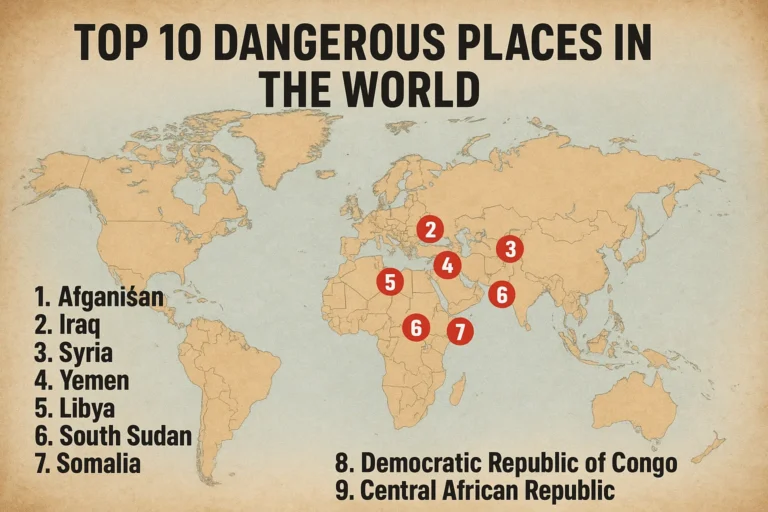

1. Gaza Strip, Palestinian Territories
- Why dangerous: Ongoing conflict, military operations, air strikes, infrastructure damage. Civilians and tourists caught in hostilities often have little warning. Limited access to medical care. Many areas under travel advisories. Travel and Tour World+2Navigatorian+2
- Why people might go: History, religion, culture, deeply sacred sites, a place rich with significance — but only with extreme caution and awareness.
2. Syria
- Why dangerous: Civil war, presence of multiple armed factions, risk of terrorism, damaged infrastructure, unstable security. Nearly all governments strongly warn against travel. Moneycontrol+3The Times of India+3Travel and Tour World+3
- Appeal: Historical ruins (Palmyra, Aleppo), ancient culture, resilience, powerful stories. But nearly always only for well-prepared travellers or specialists.
3. Yemen
- Why dangerous: Ongoing war, humanitarian crisis, cholera outbreaks, famine risk, air strikes, kidnappings. Moneycontrol+1
- Appeal: Unique landscapes (mountains, coast), ancient architecture, tribal culture. But very high risk in almost all parts.
4. Afghanistan
- Why dangerous: Taliban control, terrorism, security incidents are frequent. Infrastructure is poor in many areas. Travel advisories warn strongly. Travel and Tour World+1
- Appeal: Stunning mountain passes (e.g. Wakhan corridor), historical Silk Road remnants, deeply hospitable culture. But safety is unpredictable.
5. Somalia
- Why dangerous: Al-Shabaab and other militant groups, piracy risks off coasts, weak government in many areas, terror attacks. Travel warnings high. Moneycontrol+2The Times of India+2
- Appeal: Beautiful coastline, vibrant culture, untapped wilderness, but very dangerous for travellers without local protection and good planning.
6. Russia (certain regions)
- Why dangerous: War over Ukraine, security concerns especially near conflict zones, possible arbitrary enforcement of laws, risk of being caught in crossfires or air-raids. Travel advisories widely in place. Moneycontrol+2The Times of India+2
- Appeal: Vast landscapes (Siberia, Arctic), cultural wealth, history, but risk is high near the front lines and in militarised zones.
7. Mexico & Parts of Latin America
- Why dangerous: While many parts are safe, some areas suffer from cartel violence, kidnappings, high crime. Travel advisories often warn against certain states or rural sectors. www.ndtv.com+1
- Appeal: Rich culture, nature, beaches, cuisine, ruins. But you must know which zones are risky; avoid “no-go” areas.
8. Pakistan (border regions, Kashmir, etc.)
- Why dangerous: Ongoing tension with India, terrorist threats in some provinces, risk of cross-border shelling, political instability in border districts. AP News+3Moneycontrol+3Travel and Tour World+3
- Appeal: Spectacular landscapes, friendly people, history, hiking. But some valleys or border areas are volatile and need caution.
9. Democratic Republic of Congo & Central African Republic
- Why dangerous: Armed rebel groups, political instability, very weak infrastructure, risk of disease, difficult travel logistics. Governments often warn against travel to many interior parts. Navigatorian+1
- Appeal: Wildlife, rainforest, remote beauty, indigenous cultures. But risk from both human and natural challenges.
10. Danakil Desert, Ethiopia / Eritrea region
- Why dangerous: Extreme heat (often above 50°C), volcanic activity, toxic gases, remote terrain, limited medical help. Also sometimes conflict or instability in border or nearby zones. in.lastminute.com+1
- Appeal: Alien landscapes — salt flats, lava lakes, surreal colors. For those who can withstand heat, remote hardship, it is like nowhere else.
Additional Extreme Spots & Nature Hazards
These aren’t countries, but specific natural places that pose extraordinary danger:
- Khumbu Icefall, Everest, Nepal: Huge danger from ice collapse, crevasses, altitude sickness, weather changes. Wikipedia
- Trolltunga, Norway: Beautiful but deadly cliffs, long strenuous hike, risk of falls, unpredictable weather. AkoniTV+1
Tips for Travelling Safely to Dangerous Places
If you insist on going (and some of these places are almost impossible to “visit” safely without risk), here’s how to reduce danger:
- Research & latest travel advisories — look up your country’s foreign affairs department, US State Dept if applicable, local sources. Danger levels can change fast.
- Local guides & secure transport — trusted local operators, guides who know the area and security issues.
- Plan logistics meticulously — medical backup, evacuation plan, backup communication (sat phone or similar) in remote zones.
- Time your visit carefully — avoid rainy seasons, times of political tension, etc.
- Respect local rules & culture — some danger arises from not knowing or ignoring local norms or conflict zones.
- Be physically prepared — many of these places demand high endurance, ability to carry supplies, tolerance to harsh conditions.
Why Visit Dangerous Places Anyway?
Yes, there’s risk. But there’s also:
- raw, untouched landscapes most tourists never see
- cultural depth that only hardship tends to preserve
- stories of resilience, human courage, life at the edge
If done respectfully, travelling to dangerous places can also bring benefits: awareness, supporting local economies, highlighting humanitarian or environmental issues.
My Personal Reflection
As Raju Sharma, I believe our appetite for travel in 2026 will increasingly gravitate toward places that test us, challenge us, but also reward us with rare perspective. The thrill of scaling nature’s extremes, or walking through history scarred by conflict, teaches humility.
But danger without respect or preparation can become tragedy. We must journey responsibly. Know when to go, how to go, and when to turn back.