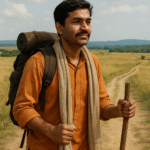


By Biswojit Mallick
There’s a special joy in traveling the world—seeing the Eiffel Tower, walking through the streets of Varanasi, or hiking the hills of Himachal. But nothing compares to the silent embrace of your own soil, the dusty lanes that shaped your childhood, or the riverbanks where your soul still wanders. I’m Biswojit Mallick, and today, I invite you to walk with me—not to a foreign city or a hill station—but to the village I call home: Gopabandhunagar, nestled quietly in Bhadrak district, Odisha, PIN 756119.
The Arrival: Returning to the Heartbeat of My Childhood
As my train pulled into Bhadrak station, I felt a strange calm. There were no honking horns, no rush of suitcases, just the warm smell of earth and distant temple bells echoing in the breeze. A short auto ride later, the familiar arch at the entrance of Gopabandhunagar welcomed me like a long-lost friend.
With narrow roads flanked by mud houses and tiled roofs, and women drawing alpana (rangoli) on their courtyards at dawn, my village isn’t just a place—it’s a timeless rhythm.
The Landscape: Green Fields, Open Skies, and Coconut Shadows
Gopabandhunagar is the kind of village where you wake up to the sound of roosters, smell the smoke from a wood fire, and see the sun rise behind swaying palm trees.
Fields of paddy and groundnut stretch as far as the eye can see, their green glowing like emeralds under the eastern sun. Small canals snake through the fields, irrigating the soil and creating perfect bathing spots for boys who dive in like little fish. I joined a few local kids, letting nostalgia take over as I splashed around like I used to.
The Baitarani River, not far from our village, flows like an ancient grandmother telling stories. During monsoon, she swells with life; in summer, she dries to a quiet whisper. Many rituals and moments of reflection are tied to this sacred river, and just sitting on her banks watching her flow is a meditation in itself.
Temples and Traditions: The Soul of Gopabandhunagar
The spiritual heart of our village beats in its temples. The most revered is the Maa Mangala Temple, where villagers seek blessings before any important event—be it harvest, marriage, or starting a new job. The temple is modest in size but immense in energy. With red flags fluttering and the smell of incense filling the air, it’s where devotion feels alive.
Another important site is the Jagannath Mandir, a place of deep communal connection. Every year, during the Ratha Yatra, the entire village gathers to pull the chariot of Lord Jagannath. It’s not just a festival—it’s a reunion, a celebration of faith, and an expression of unity. Kids wear new clothes, elders chant hymns, and women sing traditional bhajans as the chariot moves through the village lanes.
People and Daily Life: A Portrait in Simplicity
The villagers here live simply, but richly. Life starts early—men head to the fields, women draw water from wells or tend to the cows, and school kids in blue uniforms ride bicycles to the nearest government school.
In the evenings, the village square becomes a meeting ground. Elders discuss politics and crops, kids play kabaddi or fly kites, and someone inevitably brings out a harmonium or dhol to sing folk songs. There’s no Wi-Fi, no malls, no cafés—but the stories that flow here have more flavor than any Netflix series.
And the hospitality? Unmatched. If you visit even as a stranger, you will be offered a seat, a glass of cool buttermilk, and a meal that includes steaming rice, dalma, fried vegetables, and chutney made from home-grown mangoes or tamarind.
Local Food: Flavours That Linger on the Tongue and Soul
Speaking of food, Odisha’s rural cuisine is something every traveler must experience. In Gopabandhunagar, meals are not just about eating—they’re rituals in themselves. Breakfast often includes chuda (flattened rice) with curd and jaggery, or piping hot bara (lentil fritters) and ghugni.
Lunch is usually a full thali—steamed rice, dalma (a lentil and vegetable stew), bharta (mashed eggplant or potato with mustard oil and garlic), crispy saag bhaja, and occasionally fish curry, fresh from the village pond.
During festivals, special dishes like pitha (rice cakes), chakuli, and payesh (kheer) are prepared with love and shared with neighbors.
Festivals and Rituals: The Heartbeat of the Village
One of the biggest celebrations here is Raja Parba, a festival dedicated to womanhood and the Earth. For three days, women do not do any household work—they swing on decorated jhulas (swings), sing songs, and apply alta (red dye) on their feet. Girls wear bright sarees, and even the men take part in organizing the rituals. It’s a celebration of fertility, beauty, and tradition.
Another important event is Makar Sankranti, when people take a holy dip in nearby rivers, fly kites, and prepare dishes like makara chaula (sweetened rice with coconut, banana, jaggery).
Kartik Purnima is celebrated with small paper boats lit with diyas floated on ponds—offering prayers to ancestors and marking the end of the harvest season. It’s deeply spiritual, and watching hundreds of floating lamps flicker on water under a full moon is pure magic.
Traditional Arts: Threads of Identity
Gopabandhunagar, like many parts of Odisha, is home to folk arts and crafts. Local women weave patachitra-style designs on cloth during festivals. There’s also a tradition of Jatra performances—open-air dramatic plays based on mythological or historical themes. When the Jatra group comes, the entire village gathers, sometimes sitting overnight just to watch the full drama unfold.
The Danda Nacha, performed in summer, is a mix of devotion and penance, where male dancers go through physical trials while chanting prayers to Lord Shiva. It’s intense, emotional, and rooted in centuries of belief.
Schools and Progress: A Village in Transition
While Gopabandhunagar holds on to its roots, it is slowly stepping into the modern era. The local UP School now has better infrastructure, some homes have solar panels, and youths are using smartphones for education and jobs.
I met a group of young boys working on a YouTube channel to document local stories, and a young girl, Laxmi, who wants to become a doctor. These are signs of change—not disruptive, but evolving gently alongside tradition.
Monsoon Magic: When Nature Comes Alive
I was lucky to be in the village during the start of the monsoon. The air smelled of wet earth, frogs sang in unison, and the fields looked like mirrors reflecting the sky. Walking through the muddy lanes, with water dripping from mango leaves and children playing in puddles, reminded me why nature is the greatest storyteller.
Every evening, the clouds gathered like an orchestra tuning up. Then the rain would fall—not as a disturbance, but as a blessing, washing the leaves, the rooftops, the soul.
The Emotional Goodbye
After spending ten days rediscovering my roots, it was time to leave. As I packed my bag, the local priest came by with a garland and a coconut—“for safe travel,” he said. My aunt packed chakuli pitha in banana leaves for the journey, and little Raju, the neighbor’s son, asked when I’d come back again.
As the auto took me away from Gopabandhunagar, I looked back one last time. The village was still there—humble, silent, alive.
And I realized: You can travel across continents, but your soul will always crave the village where your story began.
Why You Should Visit Gopabandhunagar
If you’re a traveler seeking authenticity, calm, and a deep connection with the real India—come to Gopabandhunagar. It doesn’t offer luxury resorts or Instagrammable cafés. But it gives you something more enduring: a taste of simplicity, a breath of purity, and a heartbeat in tune with the earth.
Here, the days are long and lazy, the nights are full of stars, and the people—well, they’ll remind you what it means to belong.
Travel Tips
- Best Time to Visit: October to March for cool weather; or June for monsoon magic.
- Where to Stay: No hotels in the village, but nearby Bhadrak town has guesthouses. Or, stay with locals if you’re lucky!
- Language: Odia is the main language, but many understand Hindi and basic English.
- Things to Carry: Mosquito repellent, torch, basic medicines, and an open heart.
- How to Reach:
- Nearest Railway Station: Bhadrak (BHC)
- From Bhadrak, take an auto or shared taxi to Gopabandhunagar, PIN 756119
Till we meet again, Gopabandhunagar…
—Biswojit Mallick