
By Andrew
Introduction: The Island No One Talks About
When I told people in Cape Town that I was planning to visit Snake Island, most of them laughed — not the kind of laugh that comes from disbelief, but one that hides fear. “No one goes there, mate,” said my taxi driver, his knuckles tightening on the steering wheel. “It’s cursed. Full of snakes. The locals say even the birds avoid landing there.”
I thought he was exaggerating. As a traveler who’d been through jungles in Indonesia and deserts in Namibia, I was used to warnings. But when I finally stood on the rusted dock of that lonely island, I realized this was no ordinary destination. It was raw, untouched, and deadly — a place where the ground seemed to move because of the number of snakes crawling beneath the foliage.
This is the story of how I spent three days on Snake Island, how I fought against fear, hunger, and venomous creatures, and what I learned about survival — both physical and mental — in one of the world’s most hostile corners of South Africa.
Day 1 – Arrival: Into the Belly of the Island
The boat that dropped me off left before I could even unpack. The skipper didn’t wait for my goodbye. The sound of the motor faded fast, leaving behind only the rustle of leaves and the rhythmic crash of waves. I was alone.
The first thing I noticed was the smell — damp soil mixed with salt and something musky, reptilian. My guide in Port Elizabeth had told me that Snake Island was only a few kilometers wide, but the thick vegetation made it feel endless. I set up camp near the coast, on a patch of sand free of undergrowth.
As I pitched my small tent, I saw movement in the corner of my eye — a green whip snake gliding across a rock, tongue flicking in my direction. My heart pounded, but I reminded myself: Don’t panic. Stay still. Let it pass.
It did.
That first night, the air was warm but heavy. I cooked a small meal from my travel rations, trying to ignore the constant hiss and rustle in the bushes. The moonlight revealed glimmers of motion — scales, tails, and shifting shapes. I understood then why people called this island “alive.” Everything here slithered, crawled, or hissed.
Sleep didn’t come easy. Every sound made me grip my flashlight tighter. At one point, I felt something slide across the outer layer of my tent — slow and deliberate. I didn’t move. I didn’t even breathe. Minutes passed before it was gone. When dawn finally arrived, I felt like I’d survived a war.
Day 2 – The Jungle’s Warning
I woke up to the sound of birds — or at least, what I thought were birds. They turned out to be bats returning to a hollow tree nearby. I decided to explore deeper inland, hoping to find freshwater. I marked my trail with red cloth strips, the kind every hiker carries but rarely needs.
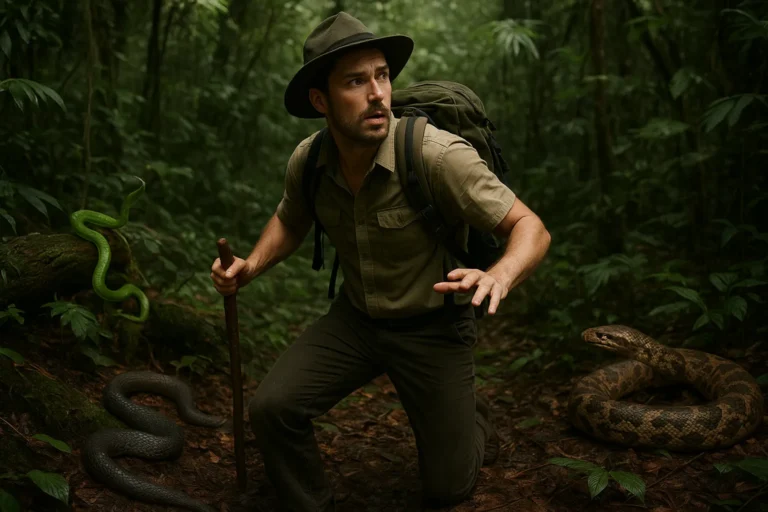
Within an hour, I was drenched in sweat. The jungle canopy locked in humidity, and my steps stirred snakes from every patch of shadow. I saw a boomslang, bright green and elegant but deadly; a puff adder, motionless and disguised as dry leaves; and a black snake too fast to identify.
It felt like the island was testing me — showing me its arsenal, daring me to make one mistake.
Survival Tip #1: Always Watch Where You Step
In places like this, every log, stone, and hollow tree can hide danger. Step on a snake, and you might not even feel the bite before the venom hits your bloodstream. The key is to walk slow, scan constantly, and use a stick to probe the ground ahead.
By midday, I found a small freshwater pond. It was shallow but clear, with dragonflies hovering above. I filled my bottle through a cloth filter and rested in the shade. That’s when I heard the unmistakable sound — a dry, sharp hiss.
Behind me, a black mamba had coiled halfway up a branch, its head raised and mouth slightly open. I froze. The mamba is Africa’s deadliest snake — fast, aggressive, and capable of killing in under 30 minutes.
I slowly backed away, avoiding eye contact. When it didn’t follow, I almost collapsed with relief. But I knew one thing for sure: this island wasn’t just inhabited by snakes — it was ruled by them.
Nightfall: The Darkness Moves
That night was worse than the first. I built a small fire, knowing the heat and smoke might deter some snakes. But the crackle of flames seemed to anger the jungle. I heard them — the soft slides of bodies through the grass, the distant croaks and rustles that never seemed to stop.
I kept my boots tied tight and placed them upside down when I took them off — an old trick to stop snakes from crawling inside.
At around midnight, I woke to the sound of something heavy near my tent. I turned on my flashlight — and froze. Just two feet away, a python thicker than my arm was sliding past. It wasn’t venomous, but it was massive. It could easily crush a limb.
I stayed still until it vanished into the dark. My hands were trembling, and I realized something vital about survival: it’s not about fighting nature. It’s about respecting it, reading it, and never underestimating it.
Day 3 – The Escape Plan
By dawn, I’d made up my mind. I wasn’t staying another night. My radio battery was low, and the small boat scheduled to pick me up might not even return if the sea was rough. I packed light, left behind anything that slowed me down, and retraced my way toward the coastline.
Survival Tip #2: Never Rely Solely on Rescue
If you ever find yourself stranded on an island, don’t wait passively. Mark your path, leave visible signs — rocks arranged in “SOS,” reflective material facing the sea. Prepare for the possibility that help might not come.
The sun was brutal that morning. I moved quickly, sipping water sparingly. Every few steps, I tapped the ground with my stick, warning snakes of my presence. Most slithered away — except one.
It was a cape cobra, golden and almost beautiful. I stepped back slowly, heart thudding, every instinct screaming don’t run. It lifted its head, hood flaring slightly, tongue flicking the air. I stood perfectly still. After a tense moment, it lowered itself and slipped away.
When I finally reached the coast, the relief was indescribable. I saw the small rescue boat — a white speck on the horizon. I waved my orange cloth and shouted until my throat burned. When the skipper saw me and turned toward shore, I almost cried.
I don’t remember climbing aboard. I just remember looking back at the island — a green, glittering nightmare fading into mist.
Reflections: Lessons from the Island
Snake Island was more than a place. It was a test of fear, instinct, and respect for nature.
When I look back, here’s what I learned — lessons anyone should remember if they ever end up in an environment like that:
1. Panic Kills Faster Than Poison.
Your first instinct when facing danger is to move, shout, or strike. But survival often depends on the opposite — stillness, patience, and observation.
2. Respect Every Creature.
Even the most venomous snake doesn’t attack unless provoked. Learn its behavior, give it space, and you’ll coexist peacefully.
3. Prepare More Than You Think You Need.
Extra batteries, satellite radio, waterproof matches, and a machete — these aren’t luxuries, they’re lifelines.
4. Nature Rewards Calm Minds.
When you stop fighting it, you start seeing its patterns — where snakes bask, where water collects, where danger hides. Survival isn’t dominance; it’s harmony.
Survival Guide: What to Do If You’re Stranded in a Snake-Infested Area
a) Stay Calm and Assess
Look around before you move. Sudden movements trigger attacks.
b) Build a Perimeter
Clear a small area for your camp. Use smoke or fire if safe. Keep your sleeping bag zipped and elevated.
c) Avoid Night Walks
Most snakes hunt or move during cooler hours. Stay put at night unless it’s life or death.
d) Snakebite Protocol
If bitten — don’t panic, don’t cut, don’t suck the venom. Stay still to slow blood flow, immobilize the limb, and seek medical help immediately.
e) Water and Food
Avoid stagnant water. Use cloth to filter. Eat only known safe fruits or fish if you can catch them.
Leaving Snake Island Behind
As the boat sped away, I felt two emotions — relief and awe. The island hadn’t beaten me, but it had changed me. It stripped me down to my instincts and reminded me of something we often forget in our comfortable cities — that we are guests in nature’s world, not its masters.
Back in Port Elizabeth, when I told locals I’d actually spent three days there, they didn’t believe me. Maybe they were right not to. The island doesn’t want visitors. It wants silence. It wants respect.
But sometimes, you need to walk into fear to understand life’s fragility — and its beauty.
Final Thoughts
Snake Island is not a place for ordinary travelers. It’s a place that tests your courage, patience, and humility. If you ever dream of going there — or anywhere similar — prepare well, respect nature, and remember: survival isn’t about conquering danger, but becoming part of the rhythm that danger obeys.
Would I go back? Probably not.
But would I ever forget it?
Never.