
By Rohit
Introduction: A Trip I Didn’t Expect to Change Me
I had planned my trip to Bangladesh months in advance. The idea was simple—explore a neighboring country rich in history, rivers, food, poetry, and resilience. I wanted to walk through old Dhaka’s narrow lanes, see the Padma River at sunset, eat real kacchi biryani, and understand a culture that shares deep roots with India yet walks its own path.
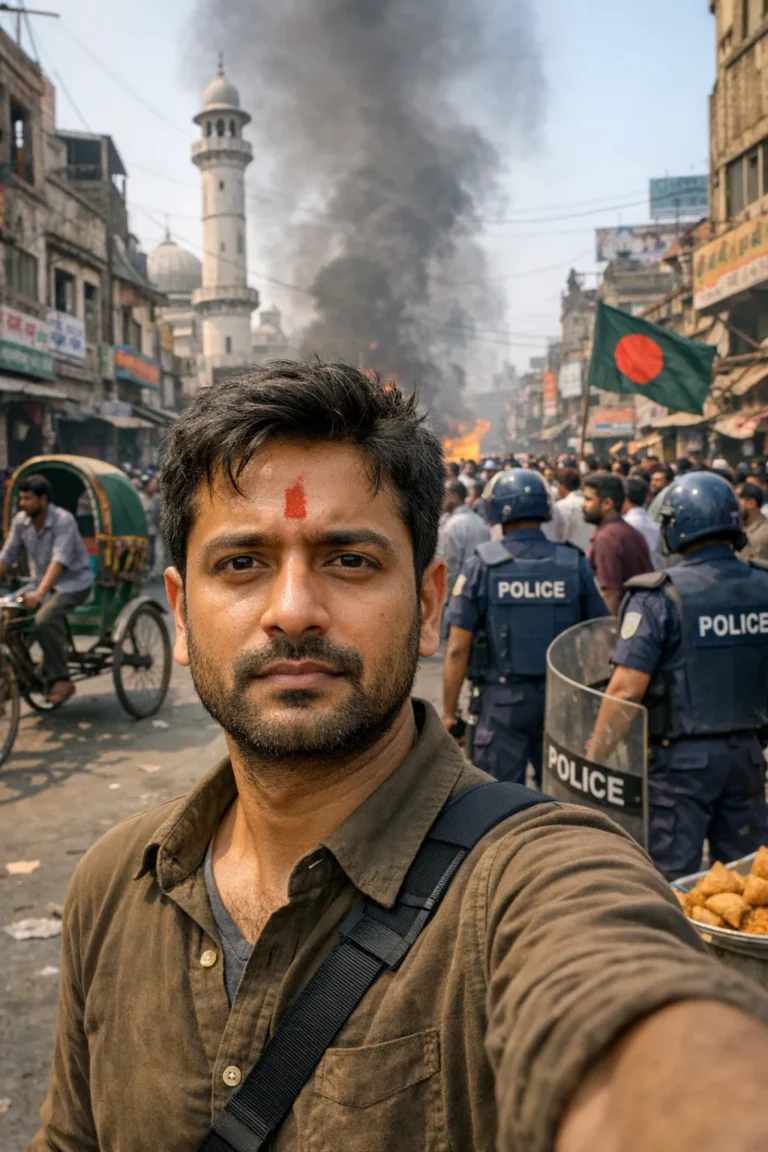
What I didn’t plan for was arriving during one of the most emotionally charged moments in recent memory—a time when the country was gripped by anger, fear, protests, and grief following a widely reported blasphemy-related incident involving a Hindu man, which had triggered unrest and intense public debate.
This blog is not just a travel diary. It’s a record of what it feels like to be a traveler when a nation is hurting, when conversations lower their volume in tea stalls, when police checkpoints appear overnight, and when ordinary people carry extraordinary emotional weight.
Why I Chose Bangladesh as a Travel Destination
Bangladesh rarely makes it to glossy travel magazines, but that’s exactly why I was drawn to it. I wanted to experience:
- A land shaped by rivers and resilience
- One of the warmest cultures in South Asia
- Deep literary and musical traditions
- Food that tells stories of Mughal, Bengali, and rural heritage
- A country that has survived colonialism, war, floods, and political upheaval
For travelers searching Google for “Is Bangladesh safe to travel?” or “Bangladesh travel experience”, the answer is complex—and this blog aims to give a real, ground-level perspective.
Arrival in Dhaka: A City Holding Its Breath
I landed in Dhaka on a humid evening. The airport was busy but unusually quiet in mood. Immigration was smooth, but I noticed more security personnel than expected.
On the drive to my hotel, my local driver—Kamal—kept the radio volume low. When I asked why, he simply said,
“People are angry… and scared.”
That night, from my hotel window, I heard distant chants. Not loud. Not violent. Just heavy.
Understanding the Situation: What Locals Were Saying
Over the next few days, one thing became clear—everyone was talking about the incident, but carefully.
From tea vendors to university students, the story came up in hushed voices. Most people used phrases like:
- “You must have heard the news…”
- “It’s very sensitive right now.”
- “Things escalated too fast.”
What I learned was this:
The incident had become a symbol, not just an event—fueling debates about religion, justice, mob violence, minority safety, and political responsibility.
As a traveler, I realized my role was not to judge or inflame—but to listen.
Being a Hindu Traveler in Bangladesh During This Time
I won’t lie—being openly Hindu during this period made me cautious.
I avoided:
- Religious discussions with strangers
- Public debates
- Crowded protest areas
But something important needs to be said here for SEO searches like “Are Hindus safe in Bangladesh?”:
In my personal experience, ordinary Bangladeshi people treated me with respect and kindness.
The fear came not from individuals—but from uncertainty and volatility.
Old Dhaka: Beauty Amid Anxiety
Old Dhaka is chaos in poetry form.
Rickshaws painted like moving art galleries, mosques beside temples, the smell of spices mixed with diesel fumes—it’s overwhelming and addictive.
Yet even here, shopkeepers closed early. Police vans stood at intersections. Conversations paused when news alerts came on phones.
Still, a biryani seller told me:
“Brother, politics and religion come and go. Hunger is permanent.”
And he laughed.
Food as Comfort in Difficult Times
Food became my anchor.
I ate:
- Kacchi biryani wrapped in banana leaf
- Hilsa fish curry near the river
- Street-side fuchka that burned my tongue and healed my heart
In moments when news felt heavy, food reminded me of shared humanity.
SEO note for food lovers: Bangladesh street food experience is raw, flavorful, and unforgettable.
Travel Safety in Bangladesh: Honest Tips from My Experience
If you’re Googling “Bangladesh travel safety during unrest”, here’s what I learned:
What I Did:
- Followed local news daily
- Avoided protests and political gatherings
- Traveled during daylight
- Took advice from hotel staff seriously
What Helped:
- Dressing modestly
- Speaking calmly
- Showing curiosity, not opinion
Travel isn’t about bravery—it’s about awareness.
Conversations That Stayed With Me
One night, I spoke to a university student named Farhan.
He said:
“When something bad happens in the name of religion, it hurts believers the most.”
That sentence stayed with me.
It reminded me that extremes don’t represent entire nations.
Visiting Religious Sites with Respect
I visited mosques, historical sites, and river ghats. I avoided temples during peak tension—not out of fear, but respect for local advice.
What stood out was how many locals emphasized:
“We don’t want violence. We want peace.”
Media vs Reality: A Traveler’s Perspective
International headlines often reduce countries to one incident.
But Bangladesh is:
- More than breaking news
- More than political unrest
- More than religious conflict
It is rickshaw pullers sending money home, mothers waiting for sons, artists painting hope on walls.
Emotional Impact: Traveling While a Country Is Grieving
This wasn’t a carefree trip.
There were nights I questioned:
- Should I be here?
- Is it ethical to travel during unrest?
But I realized something important—bearing witness with empathy matters.
Travel is not always about joy. Sometimes, it’s about understanding.
What This Journey Taught Me
- Complexity is real – Simple narratives are lazy
- People are not headlines
- Silence can be louder than slogans
- Faith, when politicized, wounds everyone
Should You Travel to Bangladesh?
If you’re searching “Should I visit Bangladesh?”, my answer is:
Yes—but:
- With awareness
- With humility
- With respect for local realities
Travel responsibly. Listen more than you speak.
Final Thoughts: Leaving Bangladesh Changed
When I left Bangladesh, I didn’t carry souvenirs.
I carried:
- Conversations
- Questions
- A deeper understanding of how fragile peace can be
This journey taught me that travel is not about escaping reality—it’s about meeting it.
And sometimes, reality is uncomfortable. But it’s always human.