
By Sheetal Kaur
Arrival in Venezuela: A Journey I Never Expected
When I planned my trip to Venezuela, I imagined vibrant streets, colorful murals, warm people, and stories of resilience. I had read about the country’s political struggles, but like many travelers, I believed that news headlines and ground reality often feel different. I arrived with curiosity, respect, and a traveler’s heart — not knowing that I would witness one of the most tense and unforgettable moments of my life.
I landed in Venezuela during a time when the air itself felt heavy. Even at the airport, there was an unusual silence mixed with alertness. Soldiers stood still with firm expressions, people whispered instead of talking freely, and phones were constantly being checked for updates. Something was unfolding, and I could sense it even before I understood it.
First Signs of Unrest
On my first day in the city, I noticed closed shops and long queues outside grocery stores and fuel stations. Locals moved quickly, as if they wanted to reach home before something unknown happened. When I asked my hotel receptionist what was going on, she looked at me carefully and said softly, “Things are not stable right now. Please stay close to the hotel.”
That evening, the sound of helicopters echoed in the sky. Sirens followed, sharp and continuous. Social media was full of confusing messages — some saying the president had been detained by American forces, others calling it misinformation, and many expressing fear, anger, or disbelief. The truth felt blurred, but the tension was real.
News That Shook the Streets
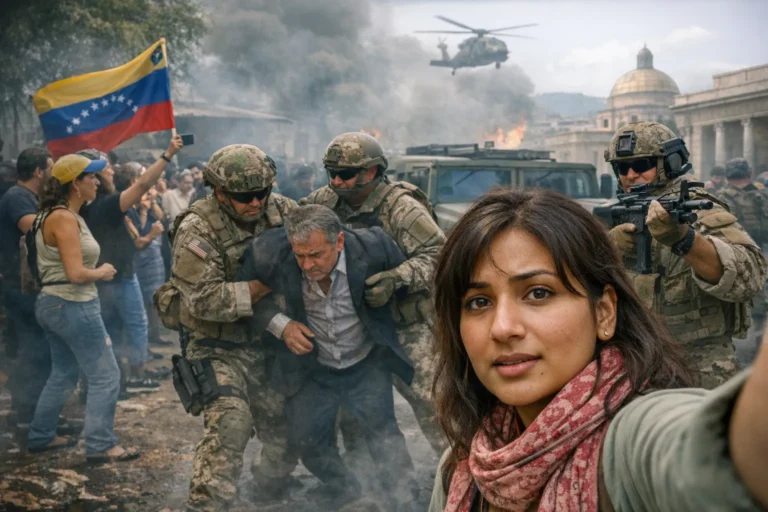
The next morning, news spread rapidly that the Venezuelan president had been arrested by the American army. Whether fully confirmed or still developing, the impact on the streets was immediate. Roads were blocked, military vehicles moved through neighborhoods, and crowds began to gather in public squares.
I watched from a distance as people argued, cried, shouted, and prayed. Some waved flags, others held banners, and many simply stood silently, unsure of what to believe. As a foreigner, I felt like a witness to history — powerless, emotional, and deeply aware that I was standing in someone else’s pain.
Conversations with Locals
One of the most powerful parts of my experience was speaking with local people. A taxi driver told me, “We have lived through years of struggle. Every change brings hope and fear at the same time.” A shop owner said, “It doesn’t matter who arrests whom. Ordinary people always suffer first.”
These conversations stayed with me. Politics was not just about leaders here; it was about food on the table, safety of children, and dignity of daily life. I realized how privileged I was to be able to leave whenever I wanted, while they had no escape from uncertainty.
Streets Filled with Emotions
As the day progressed, protests grew larger. Some were peaceful, others turned chaotic. I saw young students chanting slogans, elderly women holding rosaries, and families trying to protect each other in the crowds. Tear gas filled the air in some areas, forcing people to run for shelter.
I stayed inside my hotel most of the time, watching events unfold from balconies, television screens, and phone updates. Fear mixed with responsibility — fear for my safety, and responsibility to respect the suffering of those around me.
The Role of the Military
Military presence was everywhere. Armed soldiers guarded key buildings, checkpoints appeared suddenly, and movement was restricted. Their faces showed discipline, but also tension. It was clear that they too were part of this uncertainty, following orders while living in the same fragile reality.
The idea that a foreign army was involved added another layer of shock for many locals. National pride, sovereignty, and anger were openly discussed. For some, it felt like intervention; for others, a possible turning point. For most, it was simply frightening.
Media, Rumors, and Reality
In such moments, truth becomes difficult to define. Different news channels showed different versions of events. Social media amplified fear, hope, and confusion. As a traveler, I learned how important it is to listen carefully and not jump to conclusions.
I reminded myself that I was not there to judge, but to observe and understand. Venezuela was not just a headline — it was millions of lives unfolding in real time.
Personal Fear and Reflection
That night, I barely slept. Every sound outside felt louder. I thought of my family back home, wondering if they were worried after seeing international news. I questioned my decision to travel, but also felt grateful for the chance to witness reality beyond screens.
Fear taught me empathy. It helped me understand what it means to live in constant uncertainty — something many people in Venezuela experience daily.
Humanity in Crisis
Despite everything, kindness did not disappear. Hotel staff checked on guests, strangers shared food, and people helped each other find safe routes home. Even in crisis, humanity survived.
One moment I will never forget was a local woman holding my hand during a tense situation and saying, “Don’t be afraid. We will protect each other.” Her words still echo in my heart.
Departure from Venezuela
When it was finally safe for me to leave, my heart felt heavy. I was leaving behind people who had shared their stories, fears, and hopes with me. As my plane took off, I looked down at the land and silently prayed for peace.
What Venezuela Taught Me
This journey changed me. I learned that political events are not distant dramas — they shape real lives. I learned to value stability, freedom, and truth. And most importantly, I learned that behind every crisis are human beings who deserve to be heard.
Final Thoughts
My visit to Venezuela was not what I planned, but it was what I needed to understand the world better. Witnessing such a moment reminded me of the power of empathy and the importance of responsible storytelling.
I write this not as an expert or politician, but as a traveler who saw, felt, and listened. Venezuela is more than its crisis. It is its people — strong, warm, and hopeful even in the darkest times.
— Sheetal Kaur